Apple Watch and the Neurotic Age

Fantastic read by Simon Western, my thoughtful husband. It evokes reflection on our relationship with machines – subject which growingly concerns parents. How do we manage technology surrounding our children? How do we balance its benefits and side effects? What does technology and machines do to our children on a longer go? The text gives a deep understanding of what is the influence of sophisticated new technology products on our society and – indeed – on a constitution of humans today.

simonwestern's avatarleadership & coaching polemic

Screen Shot 2015-03-16 at 09.05.04

I joined millions of viewers online to see Apple CEO Tim Cook launch the new Apple Watch, and I admired both the extraordinary technology and the ‘classic’ Apple design aesthetic. I reflected on how we become so blasé about new technology, when only a decade or two ago this product would have seemed like science fiction. A watch that you can ask questions and it answers you! A watch that is also a phone, and an email device, and that can automatically pay your grocery bills without using a credit card. It also opens up new possibilities for health research and individual health and well-being monitoring, which I will return to. This watch is marketed by Apple as their most intimate product yet. To cite Tim Cook ‘ “It’s a revolutionary way to connect” “Apple Watch is the most personal device we have ever created. It’s not just with you…

View original post 1,174 more words

Home birth – what is the difference

Six weeks ago I gave birth to my second child, Albert. It was a home birth and I learnt some important lessons through this experience, that I wish to share for future parents who may find it useful when preparing for a natural birth (not necessarily at home).

Pain

I exactly remember the pain of giving birth to my first child, Lily Helena. The peak of it, when the contractions were the longest and the strongest felt like my lower back was cracking and spreading as a glacier. I expected the same pain for the second time but it didn’t happen.

Despite of it, I was really scared. Scared of the pain, scared of my reactions, of tiredness and loosing energy, scared of impossibility to escape the process. Scared of lack of the control and scared of the thought that the birthing process may take many hours.

I felt extremely vulnerable and what I needed from the outside world was reassurance, safety and as much comfort as possible. I also knew that these things are going to help my child to come to this world peacefully.

Relief

The haven of my own home provided the sense of security and intimacy. Home birth allowed my family to avoid separation – we stayed all together throughout the process. My husband, Simon seemed to feel much more free to take up his supportive role and act according to his intuition.
It was getting dark outside and inside Simon lightened the candles instead of turning on the strong room light. It was one of those little, subtle changes which made a big impact on labour. It wasn’t planned to have the light turned down, but midwife seemed to expect that as when it came to the second stage of labour and she needed proper light, she was using a head torch, which she brought with her.

Hormones story

What really matters during the birth is to let hormones do the right thing. Hormones are responsible for progress of the labour – oxytocin, adrenaline and endorphins are the main substances which drive the process. Their production is related to psychological condition of a mother to be and this means, for example, that too much stress can cause overproduction of adrenaline, which can inhibit the release of oxytocin.
Adrenaline is known as a ‘stress’ hormone. The more a woman is distressed the more adrenaline circulates in her body, causing trouble to oxytocin release and prolonging the labour.
Distress can be caused both by small uncomfortable stimuli – like strong light, as well as more serious issues – like fear of pain. So as labour is inevitably a stressful experience, to work through the natural birth is to minimise factors, which influence hormones in negative way and maximise those which help a woman to be relaxed (as much relaxed as possible – and I can imagine that this statement doesn’t have a limit – my friend, who was using autohypnosis techniques recalls giving birth as practically painless experience).

Interventions

In my case, the crucial role in supporting the natural course of action, played very subtle changes in my behaviour and in circumstances. They were introduced by the midwife, who attentively assisted me through the process and was giving clues and suggestions which made a huge impact on my way of experiencing the labour.
In hospital, doctors and midwives have a wide range of medical interventions to apply and they are often used. Induction of oxytocin, epidural, using of forceps, etc. – they are actions justified by the context in which the birth is happening and by the medical culture. Sometimes they are used unnecessarily, sometimes they are needed because of the hormonal process being affected by hospital environment.
What I was amazed of, was that my midwife had wide range of natural interventions to choose from and that they all made massive changes, including speeding up the action.

To list those which I remembered as being most helpful for me:

  • Relaxing the forehead. When pain was becoming more severe, I tended to frown and string the forehead. Sorcha asked me to try to relax that tension. Since then through all the labour I focused on that part of the body, remembering to have eyes wide open and have a forehead relaxed. That leaded me to make ’rounded’ noises and let me to survive through every contraction much easier.
  • Rocking. The movement played enormous role during all the labour and rocking during contraction was particularly helpful. During more difficult times, I was rocking my body resting my hands on Sorcha’s forearms, so I can say, we danced through the hard moments.
  • Changes of positions. I heard a lot about the benefit of using different positions during the labour, but I didn’t have a chance to try it when giving birth for the first time, so I didn’t really understand what does it mean. After experiencing constant changes of positions I know that this is the vital part of moving things forward and of coping with labour. That included taking few baths, and also: walking up and down the stairs, when the action slowed down. When in pain, my instinct tells me to curl up in one place, stock there and wait until the thread is gone. The key work during the labour was to resist this instinctive reaction and just move around – as much as possible. I was strongly encouraged to do so and also, Sorcha was preparing new places for me – fixing the pillows, blankets, hot water bottle, etc. Feeling free to move and being creative about it was for me the most important part of going through natural birth.
  • Avoiding screaming. When the time for pushing came I was given two pieces of advice which allowed me to push out my 4.4 kg (9.7 pound) baby very gently and with very small damage to my body. One was to switch from high pitch screaming (which again appeared as an immediate reaction on very start of the pushing stage), into making deep noises from diaphragm. That deeper voice of mine immediately guided me to find the right speed and strength of pushing (and probably also allowed our older daughter to sleep through that phase).
  • Listening to my body. It all came together when I heard these words: Listen to your body. The meaning of this sentence is very floating and almost impossible to grasp, but I didn’t have to think what does it mean. It just allowed me to follow the rhythm of contractions and let me take the control over that moment.
  • These are examples of small ‘interventions’ which I found very helpful during my labour. Some of them might be a take away for other parents preparing for birth. Above all, I would encourage mothers to be to think creatively about the process and try to anticipate what can help them to go beyond their immediate reactions for pain or fear (be it clenching teeth, frowning, getting stuck in one position, etc) and what are the subtle changes making big impact, possible to introduce in given context (whether at home, in hospital, birth centre; with partners, midwives, doulas…).At the end, I would like to pay my deep respect to the midwife – Sorcha Nic Lochlainn – for her calm, attentive, caring and beautiful presence during that special moment of my life.

    Thank you Sorcha and keep doing this fantastic work for others.*

    *In Ireland Home birth is an option available costs free for all women of low risk pregnancy.
    Sorcha Nic Lochlainn is Self-Employed Community Midwife and provides care to women who fit the HSE criteria for home birth, under the HSE home birth scheme.
    contact:
    091 648 452
    resources:
    Home Birth Association Ireland

    Community Midwives Association

Confident parents – How to resist social pressures

from: i.telegraph.co.uk

from: i.telegraph.co.uk

My cousin’s daughter Hania started primary school this year. In bundle with schooling experience came an enormous offer of additional classes. Considering Hania’s interests, time to dispose and financial situation her parents choose three after school activities. One day, when picking up Hania from school, Ewa was stopped by another mother and asked whether Hania is going to also attend robotics. When Ewa said no, explaining that Hania was spending too much time at school, the woman gave her a look of disapproval and said that there is no harm for a child to have a day filled with valuable activities.

All parents face such questions from school, alongside many other forms of social pressure.
One fear is that our child will feel excluded from the successful group of children, who are doing great in such and such subject. Another fear is we don’t want our children to miss out or become outsiders.

As parents we are also aware that our children speak for ourselves – if they don’t attend the classes, it raises questions among other parents and teachers: is it because they can’t afford it? is it because of neglect and ignorance? don’t they care about their child’s development? don’t they want to be part of our elite group?
These might be common experiences about the way other parents perceive our choices, especially in the era of parenting becoming the competitive and anxiety provoking venture. Our culture plays on parental insecurities instead of supporting confident and independent choices.

As Frank Furedi points out in his book Paranoid Parenting: ‘You can’t do too much for your kids’ – this sentence became an unquestionable rule, standing behind the pressure which parents put on themselves and each other. (This of course is a middle and upper class phenomena, which drives a huge gap between parents and schools from lower social class areas who for complex reasons don’t engage in this social pressure.)

But just because something becomes a social norm, doesn’t mean it’s true or more accurate than our own different judgement. The sad fact though still remains: far too often the social wins, even over reasonable arguments.

Social research on conformity
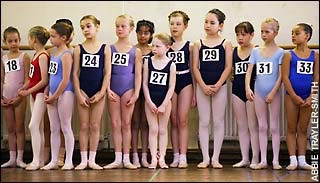
One of the most famous and well documented psychological experiments shows the power of conforming to the norm. In short, Solomon Ash (experiment first conducted in 1950′) was asking participants to complete a very simple ‘perceptive task’ – that is – they needed to asses the length of three stripes B, C, D and point the one which has the same length as stripe A. One stripe was obviously of the same length and the other two clearly differed. Apparently, in the presence of the group of people who were pointing at the wrong answer, most of participants answered against common sense, against what they saw and what they initially thought was right, conforming to the voice of majority.

This experiment gives us a clue about the nature of conformity to the social norm, but also reveals that social knowledge is not always about what’s true, valuable, really good, realistic, etc. and it ignores diversity; some children will thrive in competitive and busy cultures, others will not.

The other clue which adds emotional dimension to this cognitive distortion which happens between people is a term used by Frank Furedi to describe the social phenomenon standing behind extra classes, and other issues involving contemporary parenting. It’s hyper-parenting –
the conglomerate of anxiety, competitiveness and a desire to be a good parent, with our own needs to make a statement about ourselves through parenting role. This is a powerful emotional trigger to join the queue to gymnastic classes, to drag our children to extra maths and violin and spending money which we don’t have on activities which supposed to proof how good we are.

The obvious part which can be lost in all this madness is children’s well being. Is it really that good for them to have all the time occupied and no space for unsupervised play? It’s not only the voice of common sense but also of the specialists in childhood development: the best way to develop creativity and to learn social skills is play among peers and time free of any tasks – time which give children chance to feel bored and discover how to then manage it through imagination and creativity, to make some fun in an empty space.

There is more important source of making decisions about our children, than social pressure and this is a good faith and a sincerely asked question: what is the best for my child?

In the experiment with stripes, there was a small percentage of people who resisted social pressure. They were very confident people. It might be easy to figure out but in the parenting matter this is the key to the problem: trusting yourself and being confident in your judgement is the only way to resist and to reshape hyper-parenting culture into the direction which is good both for parents and children’s wellbeing.

How to disempower negative emotions


Travelling emotions: Kicking the cat

Displacement is a powerful defence mechanism which can be often observed in family relations. The most common example used in literature to explain displacement is the situation where a person comes back angry from work and displaces this anger onto family members. The real object of anger stayed unaffected at work, as it wasn’t ‘safe’ or ‘acceptable’ enough to express emotions directly onto him/her, whereas back in home there is a battle over some unrelated subject.

Displacement happens unconsciously. The example above is so popular, probably because it is relatively easy to bring the unconscious content on surface. We can imagine that the person who was attacked at home intervenes saying something like: ‘What’s wrong with you today? You came back so agitated, has something happened?’ The agitated person might carry on displacing their anger, or might get in contact with the real source of emotions: “Yes, I’m sorry, it’s not you, I had a horrible day at work, my boss is a bully..”.
The mechanism operates in more subversive way between parents and very small children, who can’t quite yet understand complex emotional situations or express their concerns regarding parents’ behaviour. Children then become an object of displaced emotions and the only source of rescuing the child is parent. By becoming aware of the dynamic of our own emotional experience, we can limit the negative impact from displaced emotions.

Channel for anxiety

Displacement allows our emotions to be expressed and acted out, but in ways which seems to be the easiest to bear and are socially acceptable. It means that difficult emotions are channelled unconsciously into an area which is not the primary cause. This misleading mechanism might bring us to the point when we are focusing all our effort on resolving some issue which isn’t the real problem or which is magnified by our emotions.
An example is an anxious mother of a newborn, suffering from a lack of support from family and friends. She displaces her anxiety of being a ‘good mother’ onto the baby, for example becoming over pre-occupied with a small nappy rash. The small matter of a mild skin irritation are then magnified through these displaced emotions. The mother starts observing the baby with a growing worry for the rash getting worse and bringing the child more pain. She tries all available remedies, which give her a false sense of control over the situation. As a result the baby’s rash becomes more irritated, from the mixture of excessive use of different substances and the growing anxiety from the mum. The baby is strongly influenced, by the physical over-treatment, and more importantly, by the displaced emotions the mum puts into the baby. Infants pick up the emotions of parents and act them out, so the mum’s anxiety and worry make the baby feel anxious and unsafe, and a vicious circle begins.

How to deal with displacement

It comes naturally to observe our children and learn how to detect early signs of any discomfort or danger. It is less obvious to observe ourselves and look at the signs of possible impact our actions and emotions have on our kids.
Self awareness plays crucial role in the process of disempowering difficult emotions.
When we are realising that one particular issue is preoccupying us more and more it is worth to step back and check various aspects of the situation:
– What symptoms am I observing in my child? What I can see? What others see? What does the doctor/partner/friend say? Do our versions differ significantly?
– Is it possible that something else is preoccupying me? What am I thinking of now? What is my worry?
– What are mine and what are the child’s emotions and needs?

To summarise, what we need when dealing with difficult emotions is: network support, self awareness, courage to face what’s under the surface.

These are difficult questions and nobody gets this 100% right – we all displace emotions at times, it’s part of being human. The challenge is not to do so consistently or in a way that has a negative impact on the baby

Parental Authority – out of fashion?

Authority needs to be imaginative, If you become authoritarian, you loose your authority’, Simon Western.

The dirty word

There is a problem with word ‘authority’. As said in a previous post, Authority is very often associated with the Authoritarian Parenting, characterised by little warmth, huge control, and harsh, punitive discipline*. In this light authority seems to be the tool of devil and many parents would be inclined to claim authority free parenting, and set up standards for Permissive Parenting – a warm and highly accepting style, employing reason rather than force, and indifferent about applying parental discipline.

The Parental Authority figure

Whether we like it or not, a child sees their parents as an authority figure, as this is part of developmental process. Usually parents are the main point of reference for infants, the first significant ‘others’ in children’s life, their first role-model of how the world is organised. Children carry parents in their minds and use those images when engaging in all further relationships and decision-making. In this sense, our way of caring, our values and beliefs are consciously and unconsciously the strongest of influences on our children. It is not to say that we have a full control on what we pass onto our children, other social factors also occur. Yet parents are always an authority figure to the child, as the child is always influenced by the parent… they carry parental authority whether they choose it or not. The question is how do they use this authority?

The need of authority

What is also missing in the polarised picture, represented by authoritarian and permissive parenting is the notion that children need authority to feel safe when learning and exploring the world. Applying parental authority with confidence, clarity and love provides firm, safe and consistent environment, which is the basis for children to develop.
Children are their carers’ dependant, which is not an equal relationship. It involves the use of power to make things happen. This is parent’s task to make children do or not do something, draw clear boundaries, lead actions and use their power – for children’s own safety and benefit. Put in practical context of basic needs – it is parents’ responsibility to feed children, keep them safe, warm, offer emotional security and encouraging conditions for learning.
Big part of children’s learning happens through testing, pushing boundaries, through challenging parents’ power. The hope is that through this process children learn to understand the sense of boundaries, and learn to create their own boundaries, for their own safety and benefit.
For example, it is expected from the very early stage of life, that children will be trying to break the rules, do the things which they want to, regardless parents prohibition. But provided with very clear and consistent message from parents – regarding what is right and not right – they are also expected to recognise their own benefit in moving within the boundary, and be able to take care for themselves.

Authoritative Parenting

Drawing boundaries and providing a consistent discipline is part of the safe and pro-developmental environment. The other part, equally important is emotional warmth and support. There is no right and wrong way, no absolute rules, the challenge is that as parents we must find our own way, taking account of each child’s individual needs and personality. Each parent has their unique styles of applying parental authority, and different children have unique responses and needs. The task for parents is to navigate the child’s needs whilst not avoiding their parental responsibilities.

According to the Baumrind’s model of parenting styles* these are the characteristics of Authoritative Parenting, which is claimed to be the most beneficial for children. The following lists presents the main elements of the style:

  • is accepting of child; displays frequent expressions of affection
  • sets high standards for behaviour
  • maintains consistent discipline and limit setting
  • employs reason rather than force
  • listens to child’s points of view

What is your baggage?

We all differ in a way we speak from the position of power. The way we enact authority is deeply rooted in our history of relating to important others. This why, when learning to take up the authoritative role as a parents, it is important to explore some of those topics below:

    1. what emotional reactions do you notice in yourself
      when trying to set boundaries for your children or telling them to do something?
    2. how do you look and sound like when speaking from your authority as a parent (for example talking about crossed boundaries)?</
    3. who was your first or most important authority figure?
    4. what emotional reactions did this important person evoke in you when speaking from the position of power (i.e. telling you what to do, telling you off)?
    5. what similarities can you point between you and your first authority?
    6. what differences can you point between you and the authority?

*from the model of parenting styles by Baumrind, described in: Child Psychology. Development in changing society

Parenting Styles – how should we parent?

playing children

This is the first part of the blog reflecting on the way we parent our children. It presents the wider context in which our ideas of parenting develop. It aims to help us understand what shapes and influences us as parents.

How we act as parents, depends on our beliefs and values. These are formed partly by our personality and partly by society i.e. the cultural and historical background we come from, and of course our own experience of being children.

Two major issues regarding parenting styles are: 1) parenting control; the degree to which the child is monitored, controlled and disciplined and 2) parenting warmth; the amount of emotional support and encouragement the parent gives the child.
How to combine those two ingredients in a way which is beneficial to our children? Isn’t discipline contradictory to the warmth and encouragement? Those questions bring us to the roots of our idea of parenting. It wasn’t so long ago, when the firm discipline and control were the accepted way to rear the children. Parenting then went through major cultural transformation, which brought benefits, but also new challenges. Where are we all now? Where could you situate yourself on the scales of controlling and respecting your child?

Authoritarian or Permissive Parenting?

The era of a saying ‘the child should be seen not heard’ is long time behind us. Western society went long way from one extreme idea of parenting to another. In the Victorian era attitudes formed an idea that children had to learn to be obedient, to control their emotions and their behaviour. They were to obey the unquestionable authority of parents, their matrons or carers and all adults. This fitted with wider ideas of how society was organised: in the workplace society was stratified, and authority was layered, the lower class didn’t question the higher class, and a worker obeyed the boss. Also this was the era of the ‘stiff upper lip’ – children had to learn to suppress their emotions, as in adulthood showing emotions wasn’t frowned upon. In terms of ‘parenting styles’ researched and described by psychologists*, this way of bringing up children would be called ‘Authoritarian Parenting’.
In the post-war period, and particularly following the 1960’s counter cultural revolution, we moved to the opposite extreme, which was personified by Carl Rogers Person Centred Approach to parenting. This approach drew upon Humanistic Psychology, the Human Potential Movement and the growing ideology of individualism. Rejection of discipline and focus on children’s individuality brought new challenges for parents, and adults more generally, who lost the capacity to draw boundaries and speak from a position of authority. Parenting derived from this period of social changes, can be characterised as liberal attitudes, following the child and encouraging their expression. We could call this style ‘Permissive Parenting’.
On one side we have a child deprived of expressing their feelings, and learning to control their emotions and behaviour. On the other side, a child learns to express themselves, to focus on him/herself, and who is listened and respected.

The difference between Control and Boundaries

Yet many permissive parents mixed up the issue of being controlling and setting clear boundaries. When this happens, we see children who are not happy, not nurtured but who develop narcissistic tendencies, become demanding, and most of all literally ‘cry out’ for parental boundaries which would make them feel safe and cared for.

Humanistic psychology was created as an antithesis to what was before, and the old world of institutional hierarchy and authoritarian society was rejected as a whole. We are learning today, that being completely child centred, deprives the child of the parenting it needs; it abdicates the responsibility of the parent to be a parent.
It seems we need to respond to children as individuals, yet we also need to be parents and it involves clear boundaries.

How is this synthesis happening in our homes? How do we set consistent, clear and safe boundaries, and also respond to children’s individuality?

The parenting style which addresses these issues is called ‘Authoritative Parenting’, and we will have a closer look at it in the next post.

*Diana Baumrid’s model of parenting styles, described in: Child Psychology. Development in a Changing Society, Harwood, Miller, Vasta (2008).

Bonding with your child – The Attachment Theory

20140609-212239-76959708.jpg

The use of theory

Child psychology and development studies contribute, and in many ways shape the way we bring up or children today. However, we cannot see scientific theory separately from the social context in which it was written. Knowledge can have a beneficial influence on parenting, if it is located in its cultural context, and used with attention to an individuals’ specific circumstances and considered with thought to its critique.

Taking those warnings on board, it is helpful to look at some basic concepts of child development, which can serve as a point of reference in prioritising our learning as parents.

Bowlby’s Theory of Attachment

Attachment theory, first discussed by John Bowlby become one of the best known theories in child psychology. It is widely accepted that an infants secure attachment to others, is one of the most important ‘lessons’ which parents can give to their children, and which influences how we relate to others throughout the life.

We all need a trusted base from which we can build healthy relationships with others.

Attachment is described as a unique emotional bond, between carer and child, which enables an exchange of comfort, care and pleasure. The secure attachment is characterised by four signs, which are exemplified below by the babies’ behaviour toward their primary carer:

  • Proximity Maintenance – a baby expresses a desire to stay close to the carer, reaching to him/her and preferring the carer above others
  • Secure Base – an attachment figure is a base from which child can explore the world and always comes back to carer, to assure his/her assistance in those free explorations
  • Safe Haven – a carer always offers a comfort in the face of thread – baby facing distress turns to the attachment figure for the solace

  • Separation Distress – a baby experiences anxiety in the absence of an attachment figure.

Attachment can be fully observed between 12 and 18 month of child’s life. This ability to bond with important others in a trusted way stays with us for life and becomes a crucial skill in developing supportive social network and intimate relationships.

Three other non-secure ‘styles’ of attachment are not discussed here, but can be explored from other sources

Critique

Bowlby’s theory was criticised from two main perspectives.

Feminists critiqued Bowlby’s theory saying it idolises motherhood and traditional families (as Bowlby underlined the importance of having the single first attachment figure). This was also discussed in the political context when the theory served the government in UK to persuade women to come back to their domestic roles, after working on some ‘male’ positions during the World War II.

Prof Sir Michael Rutter, called ‘the father of child psychology’, backed the feminists’ view, with his studies and stressed that it is desirable to have multiple meaningful relationships. He also criticised Bowlby for generalised and simplified position, which didn’t distinguish between consequences of not being able to develop attachment and developing one that is later lost. Rutter differentiated those two situations, claiming that it is always better to have a history of attachment, even if the attachment figure has been lost.

Application

There is one important message deriving from the attachment theory:

As a mother/father or a main carer, to facilitate your child in developing a secure attachment, respond appropriately, promptly and consistently to the child’s needs.

This is how the child will be able to feel safe enough to explore the world, knowing that she or he can always return to you as to the safe haven.
Coming back to the beginning of the post: the former theories of parenting (prominent before Bowlby’s) were recommending exactly the opposite. Parental guides were advising for example not to pick up babies between feeds, because ‘they will become fussy and needy’. This is where the science luckily stepped in and ‘proved’ the damaging effects of those strategies.

Questions

To bring the application of the attachment theory further, lets ask ourselves some questions regarding the way we bond with our children:

Charted Baby – what the chart really tells you

20140530-175918-64758423.jpghttp://www.mommyish.com

Children in numbers

There are many tools provided for you to check and measure your baby. You can for example: ‘Create a growth chart to see how your child measures up against other children in height, weight, and head size.’

You can also buy an application for your smartphone, which gives you updates on milestones reached by your baby in certain age of her/his life.
You can use charts to compare and check your baby’s motor development, cognitive skills, emotional development, etc.
You can do those home-check ups for your little one and gain evidence to praise about or to worry about – pending on what pattern your baby develops on his/her path of progress.

Following your baby’s development with your own loving eyes seems to be not enough in today’s ‘scientified’ world of parenting. We need the hard science to prove everything is normal and well. We check the charts, hoping for above-the-average performance in at least some areas. We are encouraged to do so by the mainstream materials and tools designed to guide and educate parents.

But do we ask ourselves how this constant measuring and checking influence our children? We tend not to question the charted information itself, taking it as a source of knowledge written in stone. Let us not forget, today’s scientific fact is often tomorrows failed knowledge. Questioning can actually restore our confidence which is often undermined by all the specialised knowledge.

What is wrong with the chart

First of all, lets look closer at most of those charts, which are available online. They are showing average figures for children’s progress. If we would like to take any chart seriously, we would have to look at an age range of results and in doing so, we could also see how misleading the average number is. For example: The average age for a baby to reach the skill of walking up stairs with help is 16 months. But the range in which 90% of infants achieve this skill is 12-23 months! We won’t see those numbers in most of the charts, so if our baby walks up the stairs at the age of 22 months and we compare it with 16 months number, it will raise some concerns and actions, i.e. asking for a professional advice or search through internet again. Whereas there is nothing to be worry or disappointed about.

Parental Expectations

The word ‘disappointment’ tells us a lot about the nature of those numeric tests taken on our babies. The focus on falling into the category of ‘normal child’ reflects the underlying message we give to our children, which is: ‘I expect you to be good and normal’. Allowing for difference and diversity seems to be obliterated in a world of normalising expectations.

Labelling the child

There is only one step from checking babies against the chart to labelling them. You won’t have to wait long, until you hear your own internal voice – maybe raised by anxiety – labelling your baby: slow, stubborn, fussy – referring to some of the charted dimensions. Labelling very often becomes self – fulfilling prophecy: kids who were not fussy at all, will become like that if they constantly hear this adjective from their parents. I recently heard very vivid example of this phenomena. The preoccupied mother was claiming that the baby at the age of 15 months is not able to walk. It was indeed a fact, that the baby didn’t walk when the mother was watching. She seemed very worried and even obsessed about this ‘issue’. One day, the mother and the baby were seen at the playground and the baby was walking freely when the mother wasn’t watching! We can imagine the intensity of emotions the baby was picking up from the mother and had to deal with.

Remembering the right order

Essentially, our babies don’t develop to please their parents, nor they have any influence on how they grow and progress. They are human beings living their lives and facing very intense developmental challenges on the way. This is natural that we are fascinated about their progress and we love seeing them taking the next and the next step. But we shall not reverse the order. Our baby as a person comes first, our appreciation and respect can follow.

For the peace of mind – baby products tricky marketing

The power of knowledge

Last may, exactly a year ago, my partner and I participated in the antenatal classes at the local hospital. Most of parents at the group were expecting the first child. We were absorbing every bit of information, coming from midwifes, physiotherapists, nutritionists and anaesthetists. It felt like
the right source of knowledge and professional information are the anchor which are going to help us through the process of welcoming the baby to this world and going through the life change.

This is a given that the set up of the antenatal classes gives the power and authority to all those who speak in front of the expecting parents. It is both not welcomed and difficult to imagine, that audience disagrees or discusses with the speakers. They have years of experience in the matter which most of parents to be, are debuting in. They are also talking to people in very vulnerable state, when excitement of awaiting for the baby mixes with the rainbow of other emotions – be it anxiety linked to birth, baby’s wellbeing, mother’s well being, stress provoked by all sorts of life challenges, financial pressure for providing for the growing family, etc.

Being in the process of huge transition, parents are prone to suggestions and it often happens that they are comforted by someone else giving clear and simple instructions: saying what exactly should happen and what steps parents should take. I am sure that intentions of those, who provide information for parents to be, are genuine. There are obviously important bits of knowledge parents need to get and comprehend (e.g. recognising signs of labour).

But some of those messages floating to parents add on to their anxiety and make them feel inadequate and confused.
This is particularly the case with commercial information which often takes a form of persuasion.
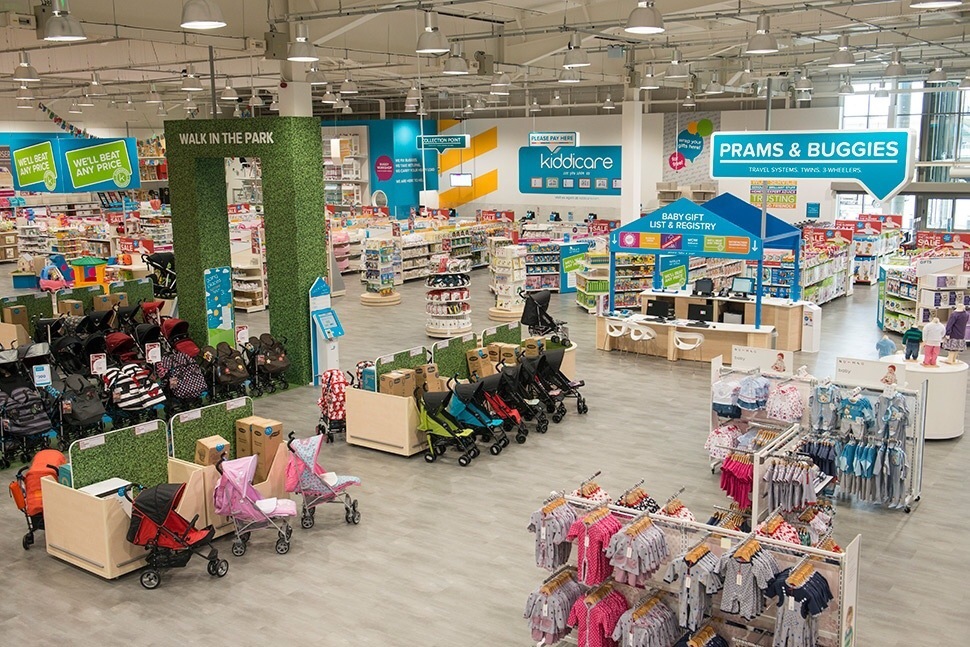
Marketing for baby products leaves parents with the impression as if stocking up with expensive and advanced products is the must for all responsible parents.

Anxiety based marketing

The antenatal classes we attended, hosted a sales representative from car seats shop. He gave a presentation on types of car seats; he brought the most expensive brand as an example, and was discussing the difference between basic and upgraded version. He said that the basic version is safe and meets the standards but the upgraded one (no need to mention about the upgraded price) is better for ‘our peace of mind’.
He didn’t say that, but the obvious consequence of his rationale is: if you can’t afford, or chose not to buy more expensive version, you can forget about the peace of mind.
The example from the shop with baby beds and mattresses is even worse. The basic version doesn’t meet the standards for protection against suffocation. If you can’t afford the better version of the mattress – we are sorry to say this – but you are putting your baby at risk. Deal with it now!
Searching through offers, articles, magazines for parents I am coming back to time when I was expecting the first baby and wondering about what we really need before the birth and trying to get get it right. In the hospital I was supplied with the plastic envelope containing the leaflets on birth plan, pelvis exercises, breastfeeding, postnatal depression, etc., and much bigger pile of adverts of cosmetic products for babies. I later on received also a small rucksack with plenty of samples. Marketing baby products is omnipresent and mostly unquestionable. The danger is that this commercial way of thinking becomes a fixed mindset, shaping our reality.

Information about product choices are based on number of assumptions which may or may not be true for expecting parents. The blurring between selling something useful and marketing a product for profit has become profound. Greater pressure is put on parents, and much of the marketing is based on raising parental anxieties…. “If you don’t buy this you are not being a good parent” is the subliminal message….The question is how do we protect ourselves from this barrage of advertising, and make the choices that are right for us, and for our babies?

20140518-221624-80184669.jpg

photo: http://www.redheadbabyled.com